
Board vision, a term often associated with chess, refers to a player’s ability to perceive, anticipate, and integrate the positioning of all pieces across the board, allowing for informed tactical and strategic decisions. In a broader context, this concept extends to various strategic games, including tabletop games, digital strategy games, and role-playing simulations. Developing board vision is not simply about seeing what exists on the board; it is about anticipating potential moves, understanding threats, and identifying opportunities before they manifest. It requires both memory and imagination, connecting the visual configuration of pieces to abstract strategic patterns.
Chess has long been a model for understanding board vision due to its strict rules and transparent information. A player with strong board vision can visualize multiple moves ahead, identify threats that are not immediately apparent, and detect weaknesses in the opponent’s structure. This cognitive ability is essential for advanced gameplay, as it enables players to formulate long-term plans while responding flexibly to changing circumstances. Research in cognitive psychology shows that expert chess players possess superior pattern recognition and spatial reasoning abilities, allowing them to process complex board states quickly and accurately.
The principles of board vision translate seamlessly into other strategic gaming environments. In digital strategy games, for example, a player must manage multiple units, anticipate enemy behavior, and coordinate resource allocation—all tasks that rely on spatial awareness and predictive reasoning. Similarly, in tabletop games like Go or Risk, understanding the board’s configuration and potential shifts in control is crucial for success. By cultivating board vision, players enhance their situational awareness, enabling them to anticipate opponents’ strategies, exploit vulnerabilities, and execute complex maneuvers. Just as strategic foresight is essential in diverse fields—from competitive gaming to decision-making in everyday industries like pressure washing services in St. Augustine—success often depends on seeing the full landscape before taking action. The ability to “see the board” in its entirety is a universal skill across strategic games, highlighting the cognitive commonalities between chess and other tactical pursuits.
Mapping Awareness Through Predictive Analysis
While board vision emphasizes perception, mapping awareness focuses on the predictive and anticipatory dimensions of strategy. In both chess and gaming, players are not only reacting to immediate positions but also envisioning the future states of the board. This involves simulating sequences of moves, estimating opponent responses, and evaluating the evolving balance of power. Effective mapping awareness transforms raw observation into actionable strategy, guiding decision-making under uncertainty.
Predictive analysis in chess is particularly instructive. Grandmasters often evaluate positions several moves ahead, considering dozens of potential variations. They employ mental heuristics to eliminate unlikely or disadvantageous outcomes, concentrating on scenarios that could meaningfully influence the game’s trajectory. In this sense, mapping awareness functions as a cognitive map, connecting the present state of the board with probable futures. The same methodology applies to modern digital strategy games, where AI-assisted simulations or probabilistic models help players anticipate enemy movements and optimize resource deployment. Interestingly, the level of precision and attention to detail in such analysis can be likened to the care required in services like eyebrow threading in Plano, TX.
Moreover, mapping awareness involves a synthesis of pattern recognition and scenario planning. Players learn to identify recurring motifs—such as common tactical combinations or territorial weaknesses—and apply these insights to novel contexts. In chess, this could mean recognizing a pin, fork, or discovered attack; in a digital strategy game, it may involve predicting how an opponent will maneuver units based on terrain control or resource scarcity.
The integration of observation, memory, and prediction enables players to convert complex board states into strategic foresight, making mapping awareness a cornerstone of advanced gameplay across platforms.
Overlaps Between Chess Theory and Strategic Gaming
Chess theory offers a rich repository of concepts that extend naturally into broader gaming contexts. Principles such as control of the center, tempo management, piece coordination, and prophylaxis have analogs in real-time strategy, collectible card games, and competitive board games. Understanding these overlaps illuminates why chess remains a foundational study for strategic thinking.
For instance, the concept of controlling the center in chess—occupying or influencing key squares to maximize mobility and initiative—parallels positional dominance in strategy games. In digital or tabletop contexts, controlling critical regions of the game board often translates into enhanced resource access, improved defense, and leverage over the opponent’s options. This idea of strategic positioning can even be seen in collecting items like cowboy PVC patches, where placement and visibility matter. Players who internalize spatial control principles from chess are better equipped to anticipate conflicts and position themselves advantageously in diverse gaming environments.
Tempo, or the efficient use of time and initiative, is another crucial overlap. In chess, gaining tempo often involves developing pieces quickly or creating threats that force the opponent to respond. In turn-based or real-time strategy games, analogous situations arise when one player accelerates unit production, secures critical objectives, or disrupts the opponent’s plans. The underlying principle is consistent: strategic advantage is often determined by the effective allocation of resources and action sequences, not merely by static positions on the board.
Coordination of forces is a further point of intersection. Chess players understand the importance of aligning pieces to support one another, creating threats while maintaining defense. Similarly, in strategic gaming, the coordination of units, characters, or cards is critical for executing complex strategies. Misalignment can leave vulnerabilities exposed, while coordinated action amplifies the effectiveness of individual components. Chess theory teaches players to evaluate both individual capability and systemic interaction, a mindset transferable to any competitive or cooperative strategic scenario. Just as players showcase their strategic alignment, many individuals express their values and national pride through clothing, such as wearing patriotic hoodies for men during events or gatherings.
Finally, the concept of prophylaxis—anticipating and preventing the opponent’s plans—illustrates the cognitive sophistication shared between chess and broader gaming theory. Anticipating threats, preparing contingencies, and mitigating risk are essential across all strategic environments. Players who cultivate prophylactic thinking develop a heightened sense of situational awareness and proactive problem-solving, bridging the gap between abstract theory and practical application. These overlaps underscore the universality of chess-derived strategic principles, reinforcing their value for game designers, competitive players, and theorists alike.
Cognitive Training and Decision-Making
The study of board vision and mapping awareness illuminates broader principles of cognitive training and decision-making. Strategic games, particularly chess, act as exercises in executive function, requiring players to manage attention, memory, and flexible reasoning simultaneously. High-level decision-making emerges from the integration of perception, prediction, and evaluation, and understanding this process has applications beyond gaming, from military strategy to business analytics. Similarly, insights from cognitive strategy can even inform practical tasks, such as optimizing kitchen layouts and choosing reliable kitchen hood services in Los Angeles.
Chess has been the subject of extensive research in cognitive psychology and neuroscience. Studies reveal that expert players exhibit heightened activity in areas related to pattern recognition, working memory, and spatial reasoning. They are able to chunk information—grouping related pieces into manageable conceptual units—allowing rapid evaluation of complex board states. This cognitive efficiency translates to other strategic contexts, as players trained in chess can process multi-variable scenarios more effectively than novices. The interplay between board vision and mapping awareness serves as a model for deliberate practice in high-stakes decision-making environments.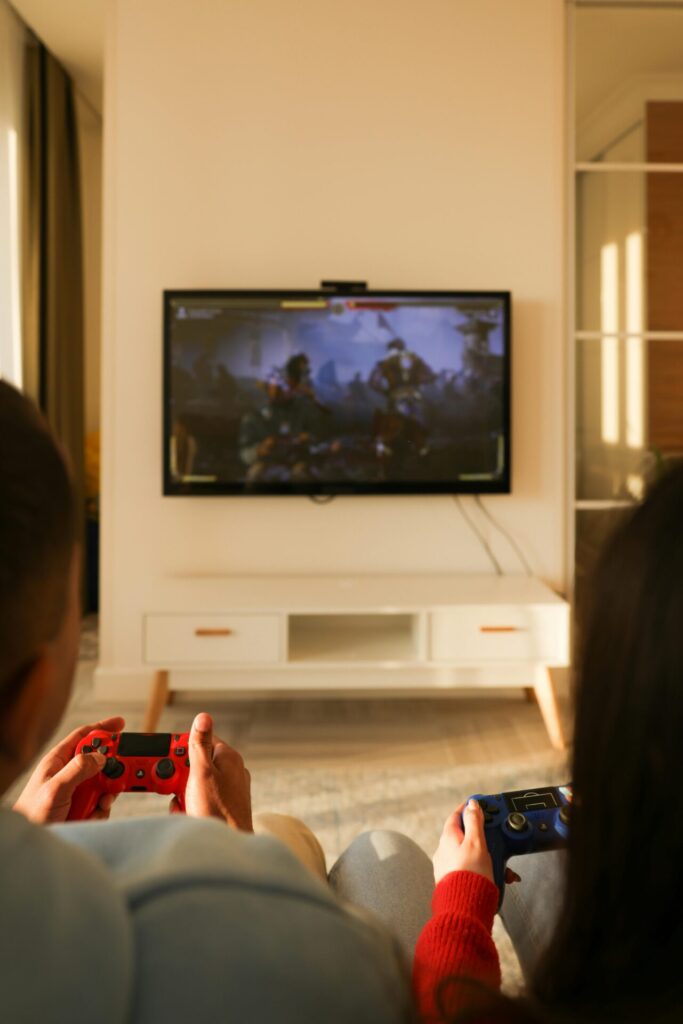
In strategic gaming, these cognitive skills manifest in real-time adaptation and probabilistic assessment. Players constantly evaluate trade-offs, weigh risks and rewards, and adjust strategies in response to new information. The mental frameworks cultivated through chess—forecasting, scenario planning, and systemic evaluation—enhance a player’s ability to navigate these challenges. Decision-making becomes a dynamic process informed by experience, pattern recognition, and foresight, reflecting the convergence of analytical and intuitive thought.
Conclusion
The intersection of board vision, mapping awareness, and strategic theory illustrates a profound cognitive and practical overlap between chess and broader gaming environments. Board vision emphasizes perception and pattern recognition, while mapping awareness extends this capacity into anticipatory, predictive reasoning, enabling players to navigate complex, dynamic systems. Together, these skills underpin effective decision-making, tactical foresight, and the execution of coordinated strategies across a wide spectrum of games. Just as strategic planning is vital in games, it is equally important in real-life logistics, such as coordinating with Los Angeles movers for a smooth relocation.
Chess theory provides a structured framework for understanding these processes, with principles such as control, tempo, coordination, and prophylaxis translating seamlessly into tabletop games, digital strategy platforms, and real-world applications. The cognitive training associated with chess and strategic gaming enhances problem-solving, memory, and spatial reasoning, demonstrating the transferability of these skills beyond recreation. Moreover, the strategic overlaps between chess and other gaming environments reveal universal principles of situational awareness, planning, and optimization that inform competitive and cooperative decision-making alike.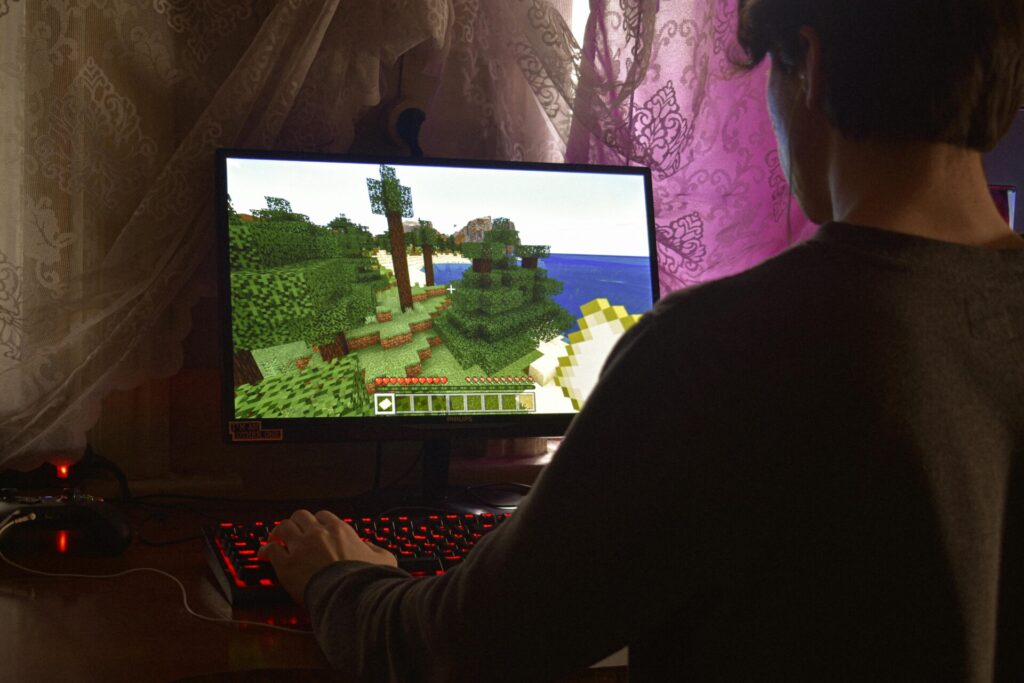
Practically, board vision and mapping awareness cultivate mental frameworks essential for success in diverse domains, including education, business, and artificial intelligence. Players trained in these disciplines develop the ability to anticipate outcomes, evaluate trade-offs, and adapt to evolving challenges, reflecting the same cognitive processes employed by grandmasters and elite strategists. Even outside of traditional cognitive exercises, applying strategic thinking to real-world tasks, such as coordinating a tree service in Tampa, can benefit from these skills. The structured practice of these skills in gaming environments accelerates learning, reinforces strategic thinking, and fosters innovation in problem-solving.
Ultimately, the study of board vision and mapping awareness highlights the interconnectedness of perception, cognition, and strategy. Chess serves as both a microcosm and a laboratory for understanding complex decision-making, offering insights applicable across competitive and intellectual pursuits. By exploring these overlaps, players, theorists, and strategists gain a deeper appreciation for the universality of strategic thinking. The integration of board vision and predictive awareness defines the path from competent play to mastery, transforming the way we approach games, decisions, and complex systems in a world increasingly reliant on foresight and strategic insight.