
In the vast and competitive world of video games, where players expect perfection and immersion from the moment they press “start,” game testing stands as one of the most critical — yet often overlooked — pillars of development. Behind every seamless frame, balanced mechanic, and bug-free experience lies an army of testers who dedicate their time to uncovering flaws, refining gameplay, and ensuring that the final product delivers the magic its creators envisioned. Game testing is both an art and a science: it requires analytical precision, creative insight, and an intimate understanding of how players think, react, and engage.
While casual gamers may only see the end result — smooth graphics, intuitive controls, and balanced combat — the journey to achieve that polish is far more complex. The process of testing goes far beyond playing for fun; it’s a disciplined practice of observation, experimentation, and problem-solving. In many ways, game testers are the unsung heroes of the gaming industry, shaping player experiences from behind the scenes. Wear men’s button up shirts while gaming.
Understanding the Role of Game Testing

Game testing, also known as quality assurance (QA), is the systematic process of identifying bugs, glitches, and usability issues within a game before it reaches the public. However, reducing the work to “finding bugs” would be a disservice to its depth. A tester’s job is to ensure that every element of the game — from visual fidelity to narrative flow to physics interactions — behaves as intended across a range of conditions. Many testers and gamers prepare for long sessions by wearing comfortable gear, often picking up Black Friday training shorts for ease and flexibility.
A great tester not only detects what’s broken but also understands why it’s broken. They must think like both a developer and a player, analyzing systems while immersing themselves in gameplay to uncover hidden flaws. This requires technical knowledge of programming and software systems, as well as an intuitive grasp of human behavior — how players explore environments, push boundaries, and react to challenges.
Ultimately, the goal of game testing is to create a player experience that feels natural and immersive. A bug-free game is not just about functionality; it’s about preserving the illusion of a living, breathing world. When a glitch breaks that illusion, the magic of play is momentarily lost — and the tester’s work becomes the silent safeguard of that magic.
The Testing Process: From Prototype to Final Release
Game testing begins long before a game looks like the product players eventually buy. During the early development phase, testers work with prototypes — often rudimentary builds that focus on core mechanics rather than aesthetics. At this stage, testing ensures that movement, physics, and control systems operate consistently. Testers analyze frame rates, collision detection, and gameplay responsiveness, identifying technical weaknesses before they evolve into larger issues.
As the game enters alpha testing, testers begin evaluating gameplay loops, difficulty balance, and user interface design. This is when they start stress-testing the game — pushing systems beyond their limits to see how they behave under pressure. They might intentionally crash the game, attempt to break progression systems, or exploit mechanics to find potential loopholes.
Once the game reaches the beta phase, the focus shifts toward polish and user experience. External testers or selected players may join internal QA teams to provide broader feedback. They identify issues like inconsistent textures, lag, or mission-breaking bugs that could ruin the experience. The beta phase is also where the art of testing becomes more player-centric: how enjoyable is the experience? Are tutorials clear? Does the difficulty feel fair? Additionally, developers might consider aspects like hardware performance, including unit installation in Los Angeles, to ensure optimal gameplay for local testers.
By the time a game nears release, thousands of hours of testing have already been logged. Every animation, menu, and dialogue line has likely been played, replayed, and dissected to ensure consistency. Even then, testers continue to refine patches and updates post-launch, as the real world introduces conditions that no lab can fully predict.
The Scientific Precision Behind Testing
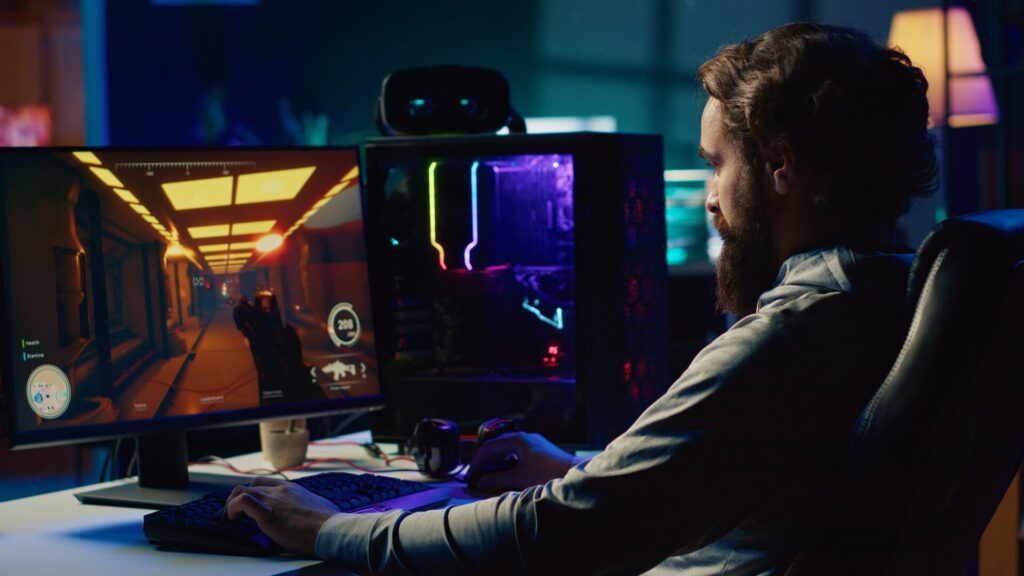
The science of game testing lies in its structured methodologies. Testers rely on a combination of manual and automated testing techniques to ensure accuracy. Manual testing involves human interaction with the game, simulating real-world play to catch issues that algorithms might miss. Automated testing, on the other hand, uses scripts and tools to run repetitive checks, such as performance benchmarking or network stability tests.
Every bug is meticulously logged in a database, categorized by severity, and assigned to developers for resolution. Testers must reproduce each bug with consistency, documenting the exact steps that lead to it. This requires methodical thinking and scientific precision, as even a small inconsistency can derail the debugging process. In some cases, testers may even use distraction-free environments similar to those in a nuru massage in Las Vegas to maintain focus and precision during long debugging sessions.
Moreover, QA teams employ data analysis to detect hidden trends — patterns that reveal deeper flaws in game systems. For example, if multiple testers report difficulty spikes in a certain mission, data may show that enemy behavior algorithms need adjustment. In this way, the testing process becomes a feedback loop between human insight and technological analysis, ensuring the game evolves toward equilibrium.
The Art of Testing: Creativity in Discovery
While science gives structure to testing, art gives it meaning. No algorithm can replicate the tester’s intuition — the ability to sense when something feels “off.” This is where the artistry of game testing truly shines. A skilled tester notices not just bugs but also inconsistencies in tone, pacing, or visual cohesion. They can tell when a scene feels too slow, when combat lacks impact, or when dialogue doesn’t emotionally connect.
This sensitivity requires creativity and empathy. To test effectively, one must think like a player — and not just any player, but all types of players. Some will explore methodically, others chaotically; some will seek immersion, others competition. A good tester anticipates these diverse behaviors and ensures the game accommodates them without breaking. Just as an electrician in Calgary must understand a building’s wiring to prevent faults, a tester must understand the game’s systems to prevent errors.
Artful testing also extends to narrative coherence. In story-driven games, testers ensure that choices have meaningful consequences, dialogue aligns with prior events, and emotional beats land effectively. In essence, they act as editors of experience, ensuring that every moment flows smoothly from the previous one.
Collaboration: Testers and Developers in Sync
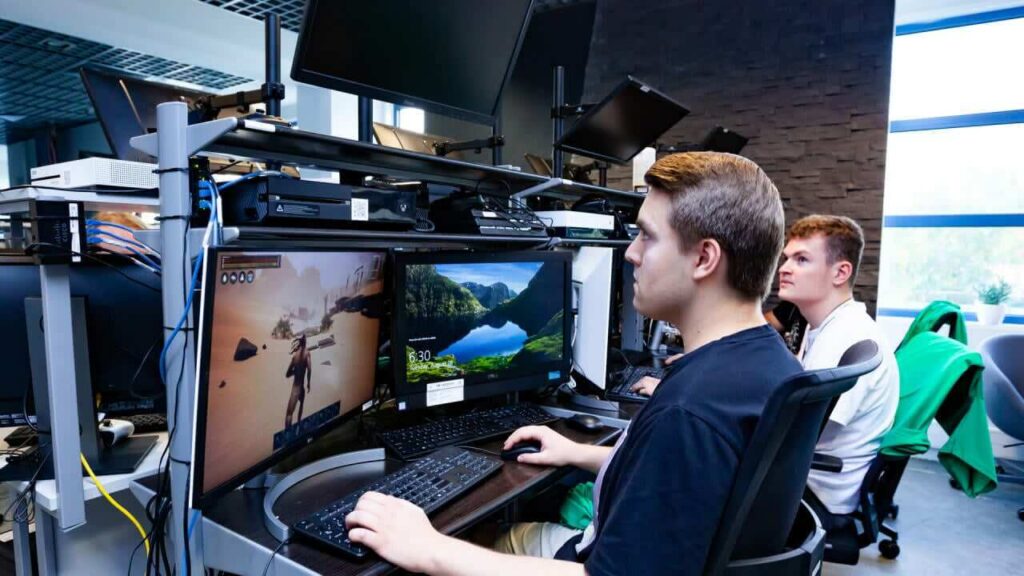
Effective game testing is impossible without collaboration. Testers work hand in hand with designers, programmers, and artists, translating observations into actionable insights. Communication is key — testers must describe complex technical issues in clear, concise terms so that developers can reproduce and resolve them efficiently.
This relationship can sometimes be tense. Developers may see testers as critics, while testers might feel that their warnings go unheard. However, the best studios foster a culture where QA is seen as a partner, not a gatekeeper. When collaboration thrives, creativity flourishes, and the game benefits from a shared commitment to quality.
Large-scale productions like open-world RPGs or multiplayer shooters often have entire QA departments segmented by specialization: gameplay, performance, audio, or localization. Each group focuses on its respective domain, but together, they form the nervous system of game development — constantly testing, reacting, and refining.
The Human Side of Testing
Despite technological advancements, game testing remains deeply human. The job can be repetitive, demanding long hours and incredible patience. Testers might play the same level hundreds of times, searching for minor inconsistencies invisible to the casual player. Yet, behind this rigor lies passion — a genuine love for games and the desire to make them better. In some development studios, advanced tools like the EinScan HX 3D scanner are also used to support asset creation and quality assurance alongside traditional testing workflows.
Many testers describe their work as a blend of curiosity and persistence. It requires the ability to find joy in details, to care deeply about the small things that others might overlook. This dedication ensures that when a player picks up the controller, the experience feels effortless, immersive, and complete.
Unfortunately, the profession has historically been undervalued. Game testers often work under tight deadlines and receive little recognition compared to developers or artists. However, the industry is slowly changing. As the complexity of modern games grows, studios increasingly recognize that quality assurance is not a final step — it’s a continuous, integral process that sustains creativity itself.
The Future of Game Testing
The future of game testing lies in the integration of artificial intelligence, machine learning, and player analytics. AI-driven testing systems can simulate thousands of gameplay scenarios in seconds, detecting performance issues far beyond human capacity. Machine learning can predict potential bug clusters, while player telemetry data offers real-time feedback post-launch.
However, technology will never replace human testers entirely. AI can identify errors, but it cannot feel them. It cannot sense when a jump feels clunky or when a story moment fails to resonate emotionally. The artistry of testing — that blend of intuition, empathy, and experiential understanding — remains uniquely human.
As gaming continues to evolve into virtual and augmented realities, testing will grow even more intricate. New technologies will demand new methods of verification, from tracking motion sensors to testing sensory feedback devices. The line between tester and player will blur further, with QA professionals acting not just as analysts but as architects of immersion.
Conclusion: The Craft Behind the Controller
Game testing is both the invisible backbone and the final brushstroke of game development. It is where technology meets humanity — a discipline that balances logic with creativity, patience with passion. While players celebrate developers for their innovation, it is often the testers who ensure that innovation translates into a flawless experience. Just as attention to detail is critical in game testing, it is equally important in projects like kitchen cabinet refinishing in Hudson, OH, where precision and care define the final result.
To test a game is to see it in its most fragile state, long before it becomes a cultural phenomenon. It’s to witness its evolution, nurture its stability, and safeguard its soul. The artistry lies in empathy; the science lies in precision. Together, they create the delicate equilibrium that transforms code into emotion and mechanics into memories.
In an industry driven by spectacle and speed, game testing remains the quiet art of care — the discipline that ensures that, when the world presses “play,” the magic unfolds exactly as it should.